En stor arktisk ö i öppet hav
Sørøya, eller Sállan på nordsamiska, ligger omkring 70 grader nord och är Norges fjärde största ö. Den är drygt 800 kvadratkilometer stor och sträcker sig ungefär 64 kilometer från sydväst till nordost. Ön delas mellan kommunerna Hasvik och Hammerfest. Högsta punkten är Komagaksla, även kallad Vatnafjellet, 659 meter över havet.
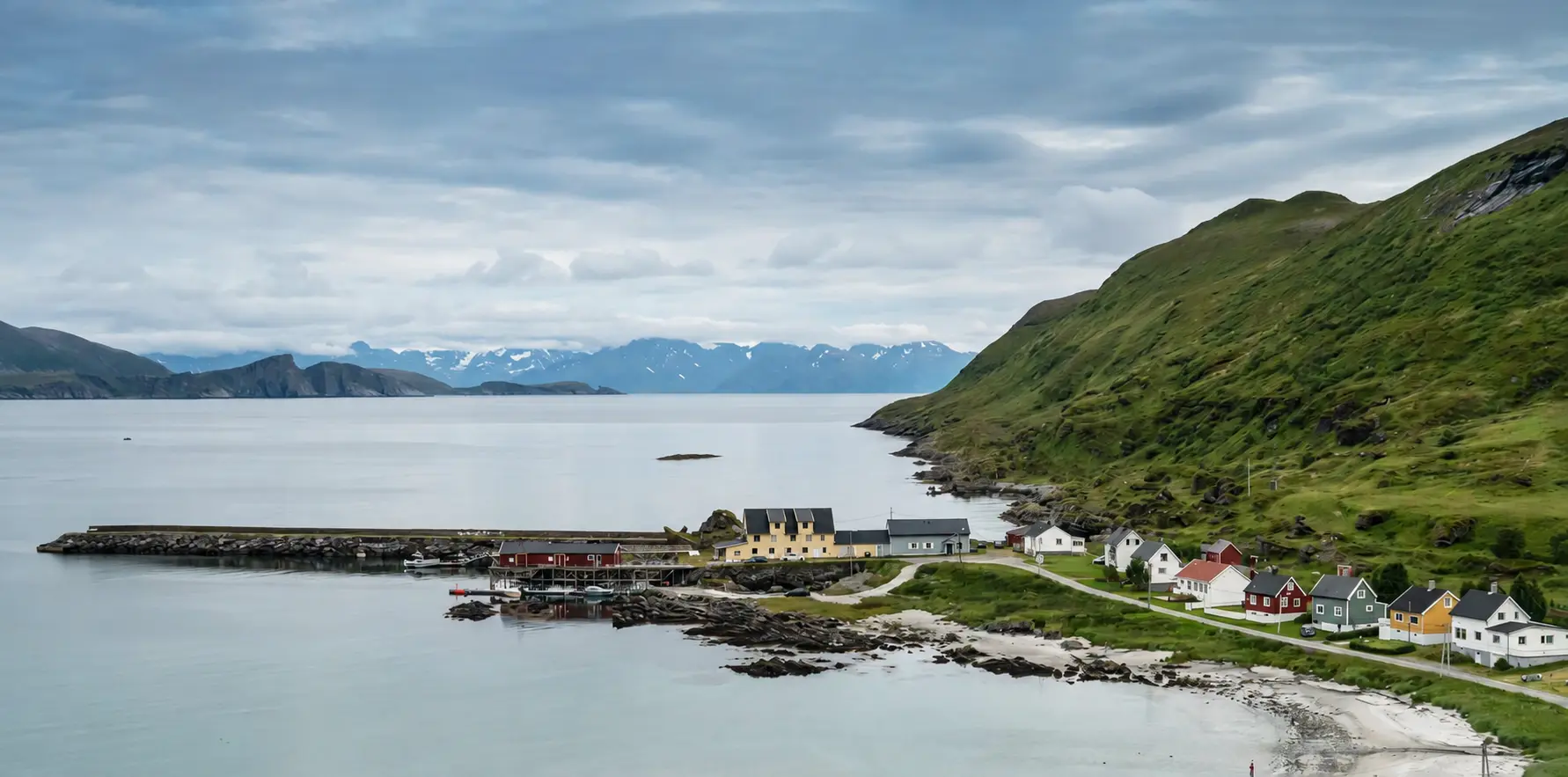
Den yttre nordvästsidan ligger öppen mot Lopphavet och det stora havet, medan Sørøysundet löper längs öns sydöstra sida. Kusten är sönderskuren av fjordar, vikar och små bukter. Branta klippor och berg avlöses av strandterrasser, grunda vikar och överraskande vita sandstränder. Inne på ön finns öppna fjällplatåer, myrar, bäckar och mängder av små sjöar.
Ett grönt landskap nästan utan träd
Sørøya kallas ibland den gröna ön. Landskapet är nästan trädlöst, men långt ifrån livlöst. Hedmark och gräsmarker dominerar, tillsammans med mossor, låga buskar, bärväxter och blommor som utnyttjar den korta och intensiva växtsäsongen. I skyddade sänkor och på sluttningar med bättre jord kan vegetationen bli förvånansvärt tät och frodig. Kontrasten mellan mörka klippor, gröna berg, ljusa stränder och klart hav ger ön dess särskilda karaktär.
Istiden och havet har format terrängen. När isen försvann började landet höja sig, och gamla strandlinjer ligger i dag flera meter över nuvarande havsnivå. På många platser syns tydliga strandvallar och terrasser av sten och grus. De skyddade vikarna, tillgången till sötvatten och det rika havet gjorde också Sørøya attraktiv för människor mycket tidigt. Arkeologiska lämningar visar att samma goda boplatser användes om och om igen under flera tusen år.
Havet styr klimatet
Sørøya ligger på samma breddgrader som delar av Grönland, men den varma Nordatlantiska strömmen ger ett betydligt mildare kustklimat än läget på kartan antyder. Havet runt ön är normalt isfritt även under vintern. Samtidigt är vädret påtagligt maritimt: vind, dimma, regn och dyning kan förändra förhållandena snabbt. Ute på Lopphavet är ön helt exponerad för väder från väst och nordväst, medan fjordar och sund kan ge lä.
Ljuset förändrar hela landskapet under året. Under försommaren och högsommaren försvinner natten i flera veckor och midnattssolen gör det möjligt att vara ute dygnet runt. Vintern innebär ungefär två månader då solen inte når över horisonten. Däremellan kommer en intensiv vår, en ljus och grön sommar och en kort höst då fjällvegetationen skiftar färg och norrskenet återvänder.
Ett hav fullt av liv
Öns natur är framför allt knuten till havet. Den varierade bottnen med grunda vikar, djupa fjordar, strömsatta sund och öppna havsbankar skapar livsmiljöer för många arter. Kusttorsken finns här året runt. Under vintern och våren kommer skreien in från Barents hav, koljan leker utanför ön och senare under säsongen samlas stora mängder sej. Hälleflundra, havskatt, uer, lubb, långa och flera andra arter hör också hemma i vattnen runt Sørøya.
Fiskrikedomen föder resten av ekosystemet. Gråsäl håller gärna till vid yttre, exponerade skär, medan knubbsäl oftare ses i lugnare fjordar och vikar. Tumlare och vitsiding förekommer regelbundet. När sill och lodda samlas längs kusten kan även späckhuggare och knölval följa efter, framför allt under vinterhalvåret. De rör sig över stora områden, så ett möte går aldrig att lova.
Fågelberg och liv på land
På den yttre kusten ligger fågelberg där tusentals sjöfåglar häckar tätt under vår och sommar. Andotten utanför Sørvær är det mest kända och skyddades som naturreservat 1983. Här och vid andra branta kustpartier finns bland annat tretåig mås, alkor, skarvar och flera måsarter. Fåglarnas aktivitet över vattnet avslöjar ofta var småfisken samlas och visar hur tätt livet på land och i havet hänger samman.
Djurlivet på land är mindre artrikt men desto mer synligt i det öppna landskapet. Tamren betar på ön under sommaren och kan dyka upp både på fjället och nära stränderna. Hare och ripa är vanliga, och i sjöar och vattendrag finns bland annat öring och röding. Frånvaron av tät skog gör att landskapet känns stort och öppet, trots att havet alltid är nära.
Naturen är en del av hela resan
De flesta kommer till oss för fisket, men Sørøya gör veckan större än timmarna i båten. På en och samma dag kan ni köra förbi fågelberg, vita stränder, betande renar och berg som stupar rakt ner i havet. Naturen är rå, öppen och föränderlig. Håll avstånd till häckande fåglar och renar, lämna inga spår efter er och underskatta aldrig vädret. Det är just den vilda karaktären som gör Sørøya så speciell.