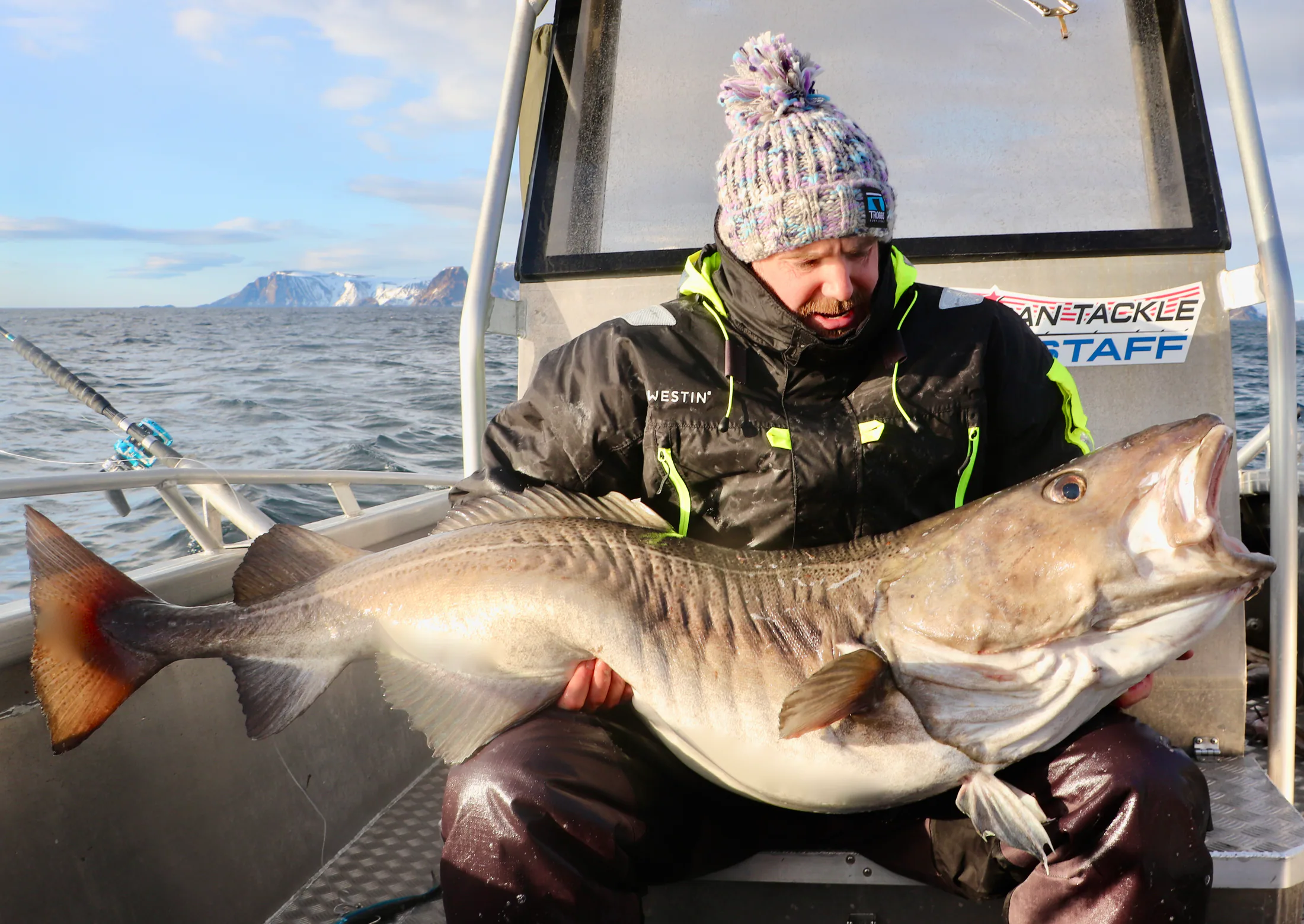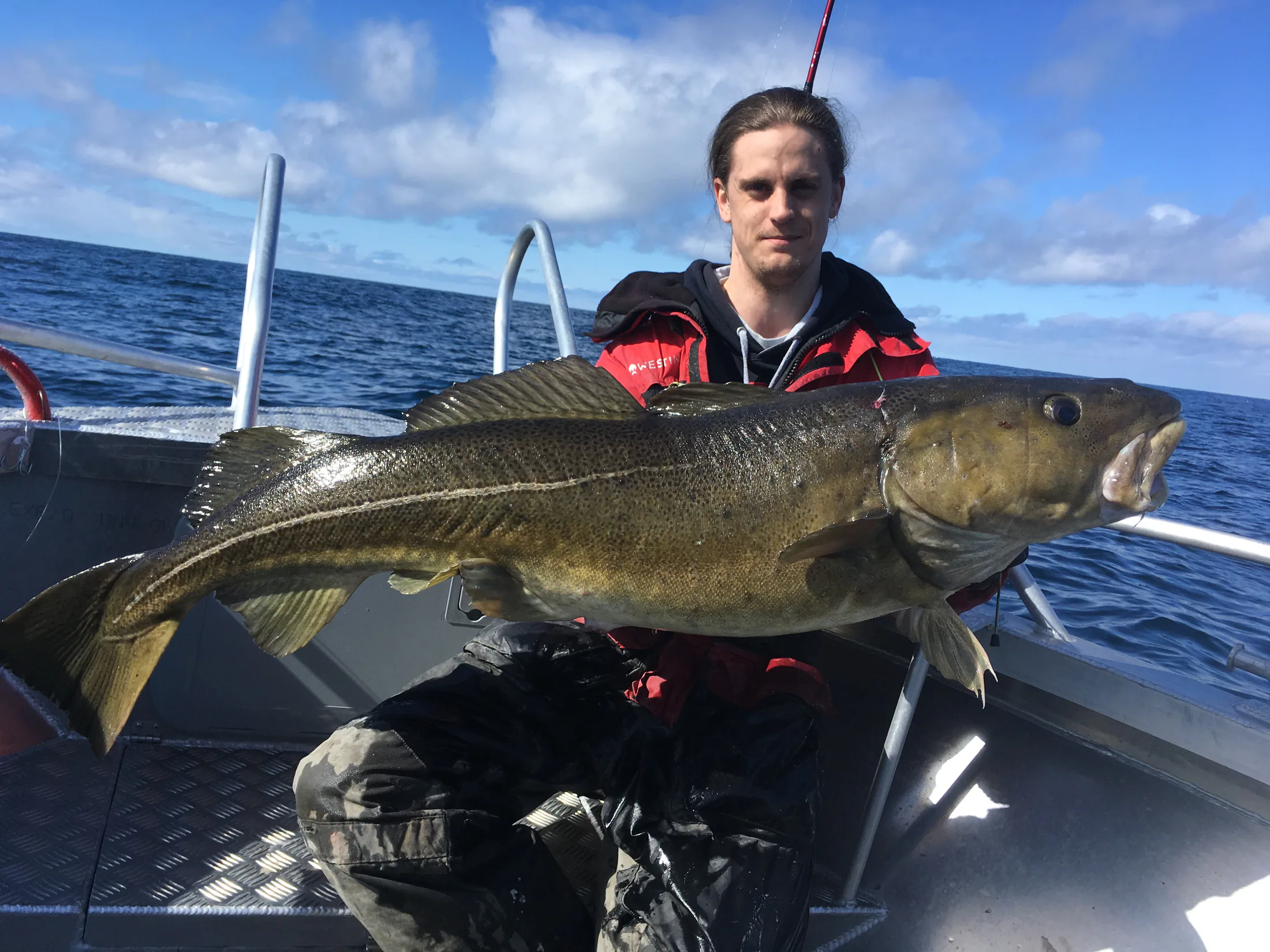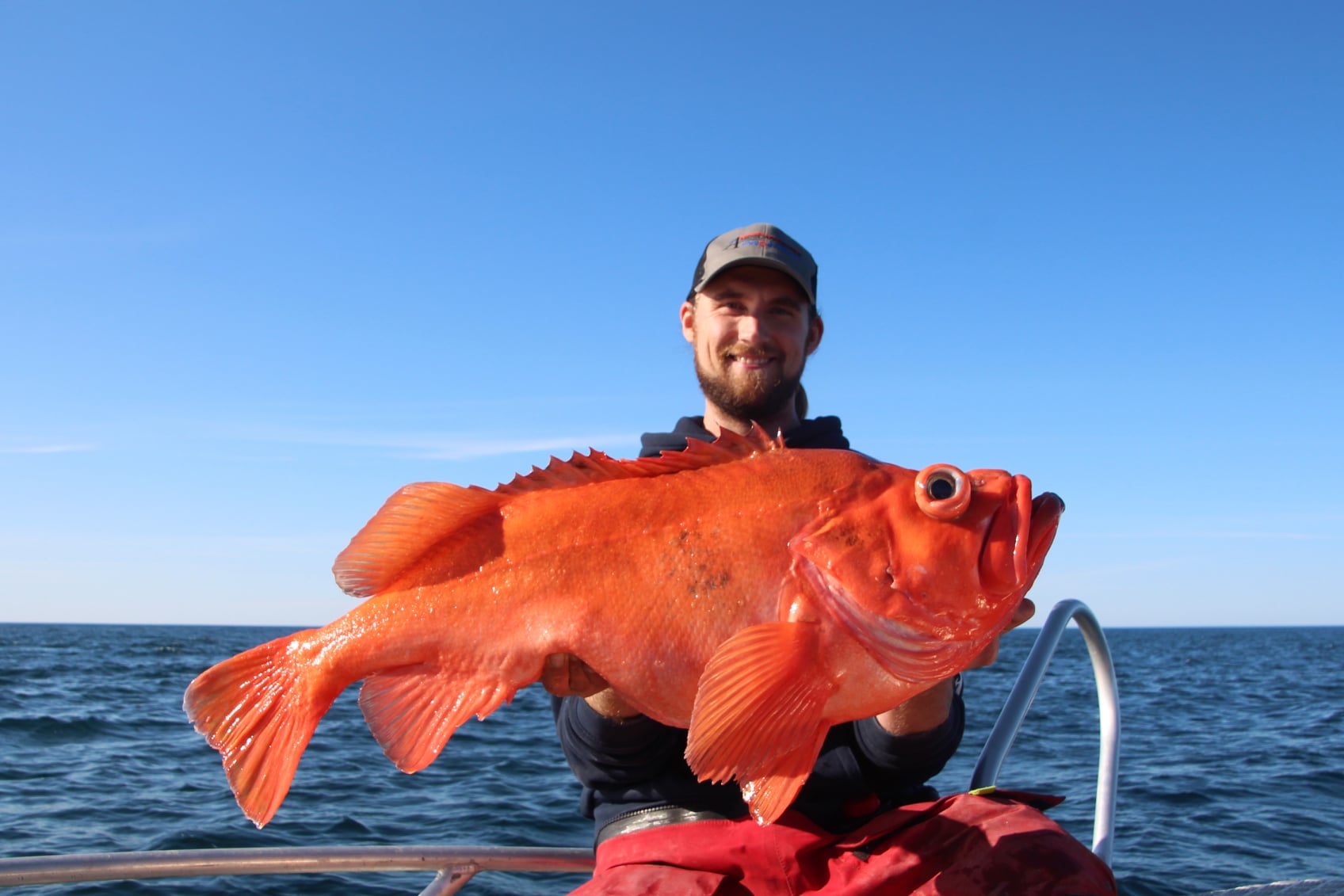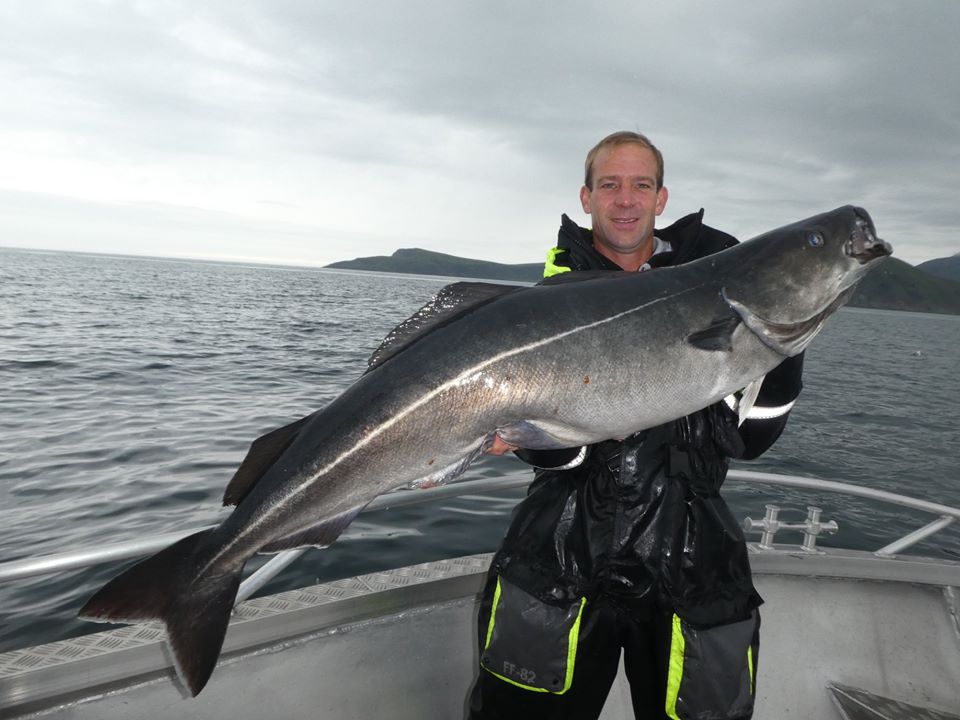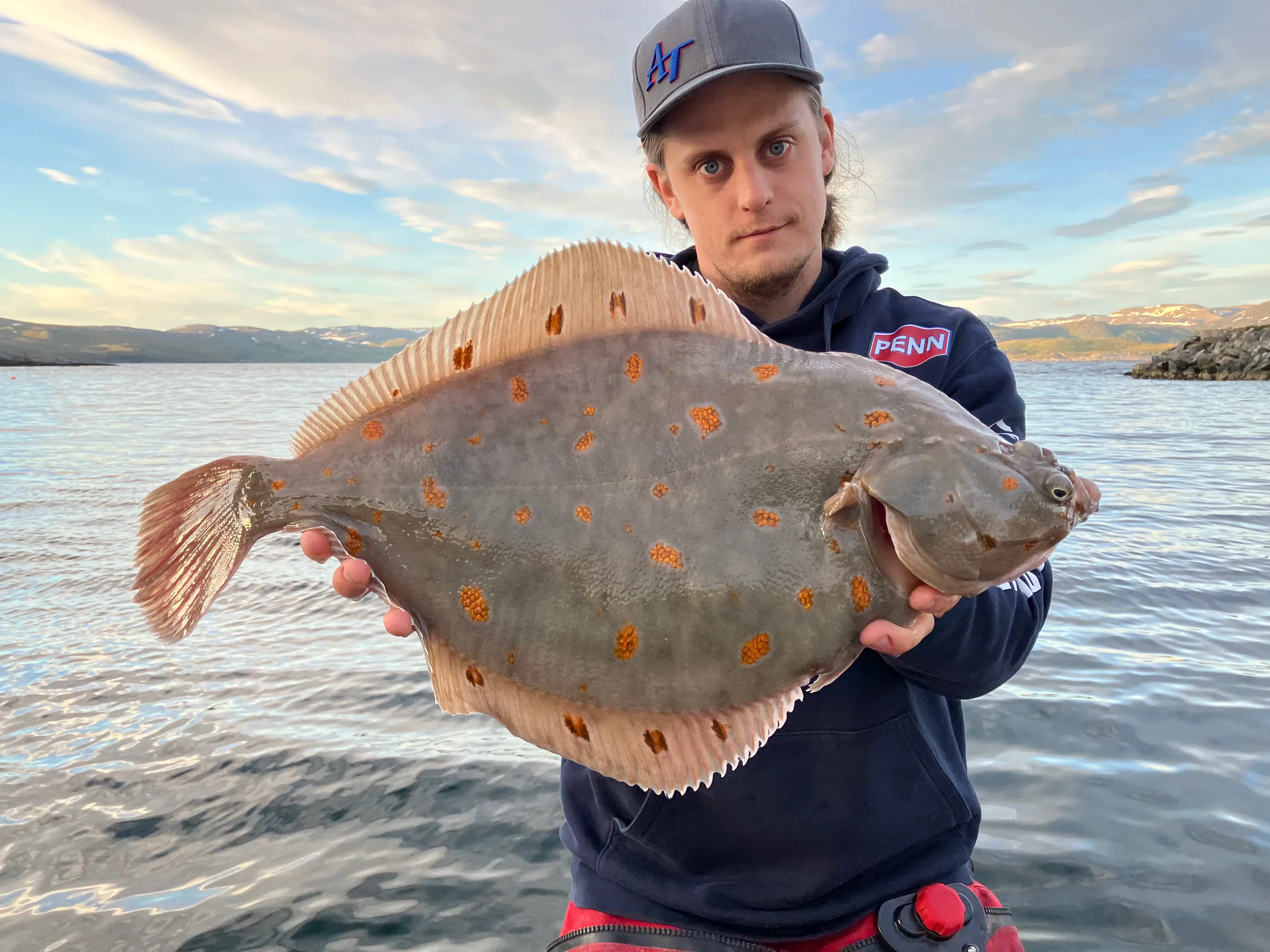
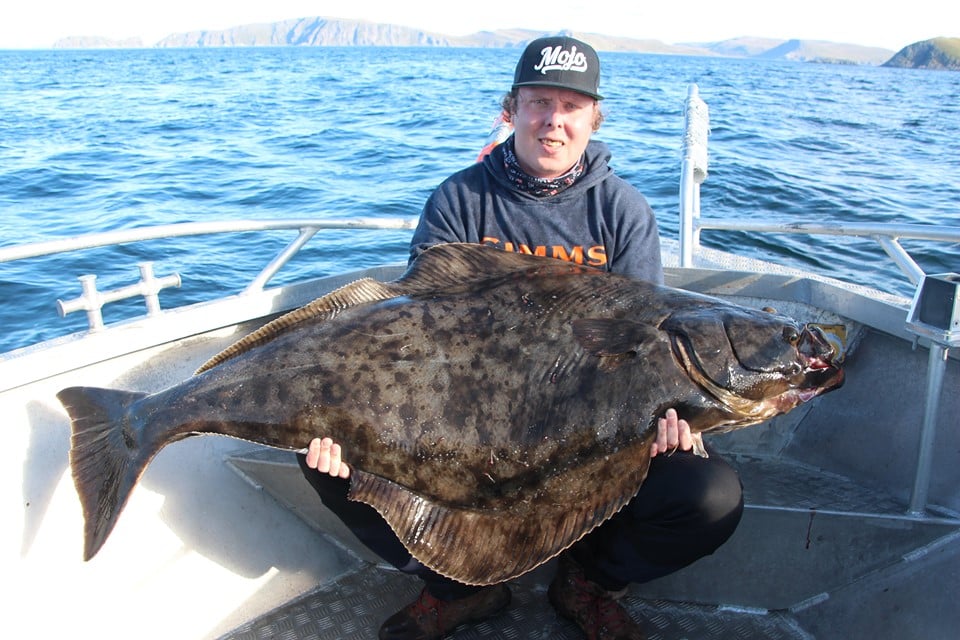
Hälleflundran är den art som drev oss att flytta till Nordnorge. Har man en gång känt på kraften hos en fisk på omkring 120 cm+ så är man fast för livet. Dessa urstarka fiskar genererar skratt, tårar, smärta och mjölksyra. De är otroligt vanliga i våra vatten och om man fiskar effektivt så kan man fånga ett flertal varje dag. Det är inte ovanligt med båtar som har 8-15 landade fiskar på en dag. Det hade snabbt kunnat bli ett lexikon av en sådan här text men vi ska försöka att hålla det kort och väldigt sakligt.
Hälleflundran äter i regel relativt små byten för sin storlek. De fiskarna vi fiskar efter på grundvatten har faktiskt tobis som huvudsaklig föda även om de såklart inte tackar nej till kolja, mindre plattfiskar, krabbor och det mesta som hamnar framför dem. Hälleflundror är överlägsna jägare och kan därför kosta på sig att vara selektiva. Det kan därför vara helt avgörande att fiska med något som imiterar basfödan eller på annat sätt triggar fisken. Att presentera rätt bete på rätt sätt kan vissa dagar vara skillnaden mellan 0 landade flundror och 20+ landade flundror.
Vi fiskar dem framförallt med jiggar eller död betesfisk. Vilken metod som fungerar bäst varierar från dag till dag och plats till plats. Oftast är det klokt att försöka komplettera varandra i båten och ha minst en jigg och minst en betesfisk ute om det är möjligt.
Jiggfisket är otroligt bra för att väcka uppmärksamhet och få tröga fiskar att reagera. Det kan ofta vara effektivt att fiska jiggen ganska snabbt upp och ned mellan botten och en bit upp i vattnet beroende på hur aktiv fisken är. Starka vibrationer som spinnertails och breda paddlar är ofta grymma intresseväckare. Hälleflundran hugger dessutom väldigt sällan en jigg för att äta. Det vet mycket väl att det inte är mat och hugger av nyfikenhet. Därför kan det vara svårare att få större, äldre och mer erfaren fisk att ta en jigg än ett naturligt bete. Mindre och mer nyfiken fisk är ofta lättare att locka till hugg. Men ingen regel utan undantag, många stora hälleflundror har kommit på jigg genom åren och vissa dagar är jigg överlägset naturligt bete.
Vi fiskar efter hälleflundra i två olika sinnesstämningar kan man säga. Aktivt födosökande fisk och mer passiv inaktiv fisk. De aktiva fiskarna hittar man ofta runt strukturer, strömsatta platser och andra områden i närheten av betesfisk. De befinner sig ofta högt upp i vattnet och hugger ganska aggressivt. Vid dessa tillfällen är det ofta effektivt med betesfisk eller en väldigt aktivt fiskad jigg som täcker av hela vattenpelaren. De passiva fiskarna finner vi ofta på lite jämnare botten. Oftast sand eller grus men nästan alltid i närheten av andra bottentyper. Passiv fisk befinner sig ofta på botten och behöver triggas till att hugga. Jiggfiske kan därför vara suveränt och gärna lite högre hastighet som snabba drifter eller trolling. Det viktiga är att presentera bete 5-10m ovanför botten så att fisken blir tillräckligt intresserad för att stiga men inte ser det tillräckligt väl för att döma ut det som något ointressant. Har de väl lämnat botten för att undersöka betet så är det vanligt att de är på och tuggar för att känna vad det är för något. Passiv fisk nappar ofta mycket försiktigt och kan behöva tugga i 10-30 sekunder innan de tar jiggen ordentligt. Det är därför viktigt att man har is i magen och inväntar en större tyngd innan man sätter mothugget.
Det går som sagt att säga hur mycket som helst om hälleflundrafiske och vi gör ett försök att ge väldigt mycket mer information när ni anländer. Vi håller ett introduktionsmöte på 1-2h och ger er den informationen som vi tror att ni behöver. Efter det finns vi såklart tillgängliga för tips och frågor under hela veckan.
Säsongen är egentligen från att vi öppnar tills att vi stänger. Ju senare man kommer desto grundare kan man ha bra medelvikt. Det är ofta mer stor fisk i närområdet i oktober än i maj. Men samtidigt blir vädret lite mindre stabilt på höstkanten. För den som verkligen vill fånga en stor fisk och kan ta risken för dåligt väder så är förmodligen september/oktober den bästa tiden att åka. För den som vill ha bra fiske och lite stabilare väder så är maj-aug att rekommendera. Under skreisäsongen kan hälleflundrafisket vara grymt bra och grymt dåligt. Det går inte att förutse. Är det stor fisk på grundvattnet så kan de gå tätt och man kan ha fantastiskt fiske. Men man ska nog sikta på en torskvecka och se det som en bonus om man träffar superfiske efter hälleflundra.
Camprekordet är för närvarande på 253 cm fångad av vår guide Daniel Eriksson. Den fisken spränger gränsen för hur långt vikttabellen går. Men med tanke på konditionen så kan vi enkelt konstatera att den är över 250 kg och förmodligen betydligt mer än så. Det finns fiskar som har vägts till 300 kg+ som är kortare och ser ut att vara klenare i kroppen. Men det är såklart svårt att säga. Fiskar på över 150 cm fångas i regel varje vecka när vi har full camp med 12 personer. Så chanserna är goda. Bäst antalsfiske och medelvikt har vi ute på Storskalltaren och uppe i Kamøysundet.
Här är ett par videos om vårt hälleflundrafiske:
YouTube · Läs merYouTube · Läs mer